

HSE University–St Petersburg Students Study Diversity of Social and Climate Changes During Expedition to Himalayas
A team from HSE University–St Petersburg has returned from an expedition to the Himalayas. Together with colleagues from the universities of Delhi and Jammu, they studied the local mountain communities of the northern part of the famous mountain system.

The expedition lasted for 12 days, during which the participants visited the cities of Leh and Kargil, as well as five villages in Ladakh State in the north-western part of the Himalayas, and conquered several mountain peaks exceeding 4,000 meters in height. The programme of the school included lectures and seminars by experts from Indian universities, project work, an introduction to the activities of NPOs and government agencies in the sphere of sustainable development, and interviews with the locals and government representatives.
The researchers focused on the local communities and their stability in terms of climatic, economic, and social changes. The expedition team studied the traditional lifestyle of the villages of Likir, Garkon, the upper and lower Khanu, and Malbekh. The trip to India was organised by the St Petersburg School of Social Sciences in cooperation with the universities of Delhi and Jammu.


The summer school was the third expedition by HSE University–St Petersburg to the Himalayas. During the first two trips, the teams visited the states of Himachal Pradesh, Jammu, and Kashmir. This time, the researchers focused on Ladakh State and its eco-climatic and ethno-religious factors, which can be reviewed in comparison to Russian mountain communities, in particular the highlands of Altai. Ladakh is home to representatives of many religions, and the residents of some remote villages combine buddhism and paganism. There are also several closed communities in the region, which was a separate subject of research for the HSE University–St Petersburg team.
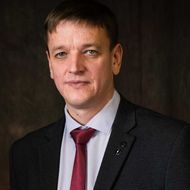
Alexander Sorokin
Dean of the School of Social Sciences
'In addition to developing skills for carrying out field work and immersing ourselves in the cultural diversity of the studied communities, we strengthened partnerships and friendly relations with our colleagues from India. The school participants visited one of India's biodiversity parks in Delhi. The experts from the University of Delhi shared the story of the park's foundation and how they were trying to use the park's activities to change the population's attitude toward the environment and ecological problems. In addition, we held several productive meetings with local NPOs, eco-activists, and governmental agencies of Ladakh State,' explained Alexander Sorokin, Dean of the School of Social Sciences.
During the summer school, the students learnt to work with qualitative methods of sociological and anthropological research. The main form of data collection was a semi-structured interview. The expedition participants also carried out surveys, observations, photo and video recordings: all the materials were used in individual projects. One of these was devoted to grassroots innovations created by the locals. For instance, the summer school participants studied new methods of land irrigation, cooking, or heating.
'All of us had a common interest in studying the lifestyle of the local communities and the influence of natural processes. We also had our individual interests. For me, it was exploring the role of state and local authorities in this process. From what I've seen, the governments of India and Russia have similarities and sometimes similar problems. For example, the issue of employability is especially acute, in particular in small settlements. In India, the state allocates workplaces for "scheduled tribes" and, in general, has a separate policy concerning issues of political representation, education, and healthcare for these categories. Of particular importance for the population is the regular army, as it allocates workplaces and provides guarantees for the sales of agricultural products. An interesting fact: the most common subsidies are those for solar water heaters, panels, houses, roads, and agricultural equipment. The local government also carries out green space expansion programmes.
I am sure that we have achieved a practical result which will truly help to solve problems and improve people's lives,' said Anastasia Kravtsova, third-year student of the Bachelor's programme 'Public Policy and Analytics.'


'This is my first experience of field work, and at first, I was worried that it would be hard for me to communicate with people who can't speak Russian or English. However, the local residents and our Indian colleagues, who helped with the translation, were very friendly. It made the communication much easier. It was really useful for me to learn how anthropologists work and try out this role. Moreover, I got an excellent opportunity to practice English and get out of my comfort zone, interacting with representatives of another culture.
I studied the arrangement of local communities and the level of trust among the residents of the Himalayan villages. According to my observations and respondents' answers, the level of trust and mutual help is very high among the indigenous people of 'closed' villages, where it is hard for strangers to purchase land. This was confirmed by the residents' behaviour: as a rule, plots of land are fenced in but are still open; anyone can enter. The locals often invited us, strangers, to their homes and treated us to tea. However, young people and residents who have arrived recently (for example, teachers) showed a much lower level of trust in those around them, but they were still very open and glad to answer our questions. In more 'open' villages with lots of migrants and representatives of various religions, there is a greater atomism, and the level of trust is much lower, especially towards representatives of other cultures,' shared Olga Prutyan, third-year student of the programme 'International Bachelor’s in Business and Economics.'
As a result of the expedition, the participants gathered a wide range of opinions from various categories of locals (from farmers to the state governor, comprising more than 40 interviews in total) on further development of the region. The resulting materials provided the basis for drawing up supporting guidelines for the population.


'The new travelling format of the summer school is very promising for students because it allows them to develop competencies related to interviewing and data processing. We have a lot of work ahead to analyse the collected material and transcribe it into two languages. The research results of this trip will be combined with the previous ones, and the overall outcome will help to better review how the local communities cope with climate changes, notably, in different regions and with various social groups,' underscored Dmitry Omelchenko, expedition participant and research fellow at the Centre for Youth Studies.
'It's useful to study highland territories not only as models for other mountain ecosystems. Such research helps to assess the impact of climatic, ecological, and economic changes. I was very surprised when I saw apple trees growing at 4,000 metres. Ten years ago, there was nothing like that, and now there are even apricot trees.
During the expeditions to the Himalayas, we develop and adjust a new methodology for assessing the resilience of local communities to climate change along the way, based on their impact on the population. At the moment, there is no similar methodology anywhere else.
The expedition is an interdisciplinary work at the junction of social and natural sciences. It is also an opportunity to find new partners and colleagues from the authorities and businesses interested in the results of comparative research and developing policies and practices to adapt to ecological, climatic, and economic changes. The results of the summer school expedition open up new opportunities for cross-country multidisciplinary research, the development of climate resilience expertise in local communities, strengthening of the partnership between HSE University and the University of Delhi, and general Russian–Indian academic cooperation,' summed up Alexander Sorokin, Dean of the School of Social Sciences.
The School of Social Sciences has been carrying out projects in social, political, and humanities research and data analysis in the framework of its international partnership with the University of Delhi since February 2024. The joint research project spans over five years.