

‘Analytical Centres and Programmes for PhD Students’: HSE University–St Petersburg Offers New Formats of Cooperation with PRC
The Rope Shop Educational Space of HSE University–St Petersburg hosted a conference on the present and future of Russian–Chinese relations. Together with Luo Zhanhui, Consul General of China in St Petersburg, leading experts in Asian and African Studies discussed vectors for the long-term development of the countries, the synergy of joint projects, and future educational partnerships.
.jpg "‘Analytical Centres and Programmes for PhD Students’: HSE University–St Petersburg Offers New Formats of Cooperation with PRC")
The conference 'Prospects of Russian–Chinese Cooperation in the Context of the 4th Plenary Session of the 20th CPC Central Committee' was one of the first expert sessions in Russia devoted to the development of the PRC up to 2030. Researchers from HSE University–St Petersburg, Saint Petersburg State University of Economics, St Petersburg State University, and other leading St Petersburg universities identified strengths of the five-year plan and opportunities for enhancing research and educational ties.
Anna Tyshetskaya, Director of HSE University–St Petersburg, talked about the recent academic mission of the campus to China. University representatives visited key universities in China: Tsinghua University, Peking University, Renmin University of China, Beijing Normal University, Fudan University, Zhejiang University, and East China Normal University. During the visit, HSE University–St Petersburg signed a cooperation agreement with Nanjing University of Information Science and Technology. The parties plan to develop student and faculty mobility programmes, the exchange of academic experience, and new research projects.

Anna Tyshetskaya
Director of HSE University–St Petersburg
'Today, international activities and cooperation are a vital element in the development of countries, their technology, and innovations. That's why the training of specialists who understand the context of countries' development is a strategic task for our university. Asian and African Studies are among our main priorities, and we are actively supporting expert and research activities in this direction. It is important for us that the Consulate General of China sees HSE University–St Petersburg as the centre for uniting leading experts in Asian and African Studies. I am confident that the conference will lead to specific initiatives which will be the basis for strengthening diplomatic relations between Russia and China.'

Luo Zhanhui
Consul General of China in St Petersburg
Luo Zhanhui, Consul General of the People's Republic of China in St Petersburg, emphasised that cooperation between Russia and China has played an important role in shaping the community of a shared future for mankind. The work of researchers is a foundation for partnerships.
'The strategic plans of China and Russia have lots of common goals: a focus on high-quality development and innovations, openness to the world, and concern about human capital. Researchers are a think tank which serves to strengthen our relations. The diversity of the conference topics proves that there is a large space for a dialogue and shapes our common future,' believes Luo Zhanhui.
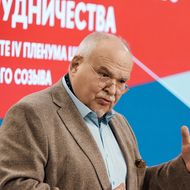
Evgeny Zelenev
Director of the Institute of Asian and African Studies at HSE University–St Petersburg
According to Evgeny Zelenev, Director of the Institute of Asian and African Studies, the conference results will spark great interest in China. For Russian researchers, it is a chance to discuss less obvious but promising spheres for cooperation between the two countries.
'For the last ten years, I have been studying China's policy on the African continent. These years vividly demonstrate how the PRC turned from a mediocre political actor in Africa into a leading political, economic, cultural, and ideological force. It has huge potential to strengthen its political qualities: the powers of the country itself, the synergistic effect of alliances with other states, and global governance via cooperation. Implementing global initiatives offered by China affects all spheres of human life. I am certain that the conference will contribute to a better understanding of strategies of Russia and China,' underscored the director of the Institute of Asian and African Studies.


Svetlana Krivokhizh, Head of the Department of International Relations and Political Processes in Asia and Africa at HSE University–St Petersburg, highlighted the features of expert diplomacy in Russia and China. According to the professor, the PRC has extensive experience in developing international expert centres. These can become platforms for exchanging data and aligning the positions of the countries on strategic issues, as well as a place to unite cultures.
Maria Soloshcheva, Deputy Director of the Institute of Asian and African Studies at HSE University–St Petersburg, shared the educational prospects of Russian–Chinese cooperation. She said that the age of dividing knowledge into natural science, humanities, and social sciences was becoming a thing of the past. The interdisciplinary approach implemented at HSE University–St Petersburg and Chinese universities is becoming increasingly important.

Maria Soloshcheva
Deputy Director of the Institute of Asian and African Studies at HSE University–St Petersburg
'Take into account the national and foreign, unite the past and present, integrate humanitarian and natural sciences, and create new knowledge—this slogan appeared in China more than 100 years ago, but now, it is becoming of great importance. For more than ten years, the Institute of Asian and African Studies at HSE University–St Petersburg has been shaping an educational model which allows every student to understand the foundations of basic sciences, the mentality of other peoples, and master the methodology of cross-cultural research. This approach unites HSE and Chinese universities.'
The conference participants emphasised that most often, the joint programmes of Russian and Chinese universities are aimed at training bachelor's and master's students. Double-degree and academic exchange programmes cover both technical and humanitarian qualifications. However, international opportunities for PhD students are currently limited. This is a promising direction, which will be further developed during Years of Education in 2026 and 2027. Maria Soloshcheva sees prospects of creating a united Russian–Chinese educational space, which would play an important role in scientific diplomacy.

Summing up the conference results, Luo Zhanhui, Consul General of China in St Petersburg, highlighted the detailed initiatives of scientists for strengthening international ties. He said that the event would be a starting point for introducing new initiatives into diplomatic and research relations between Russia and China.
