About
HSE University in St. Petersburg and the University of Graz welcome applications for the first joint Summer School entitled 'Russia and the West: Cooperation through Dialogue'. The HSE SPb X Uni Graz Summer School will take place in St. Petersburg from August 15 to August 26, 2022.
The Summer School will focus closely on broad matters of shared concern pertaining to law and policy in EU and Russian foreign policy, as well as the Eastern Partnership (EaP) and other policy fields currently undergoing transformation and revision in light of emerging international challenges.
It will also address a number of issues that currently dominate the headlines of EU-Russia relations and attempt to approach them in a multidisciplinary setting. In an era of increasing challenge and contest, the underlying philosophy of the Summer School is 'cooperation through dialogue'. This is not only the title of the Summer School but also an important motif to be considered by policymakers.
-
Developing soft skills
Through discussions, talks, and networking, you will enhance your public speaking skills, argumentation, and critical thinking
-
Credit-bearing programme
Upon completion of the programme you shall earn 4 ECTS credit points
-
Vivid student community
You will have a chance to forge new friendships with international and local HSE students
-
Finest academic team
Some of the best academic minds from political science and legal studies will gather together to share their insights into the field of mutual EU-Russia relations with you
-
Splendid city to visit
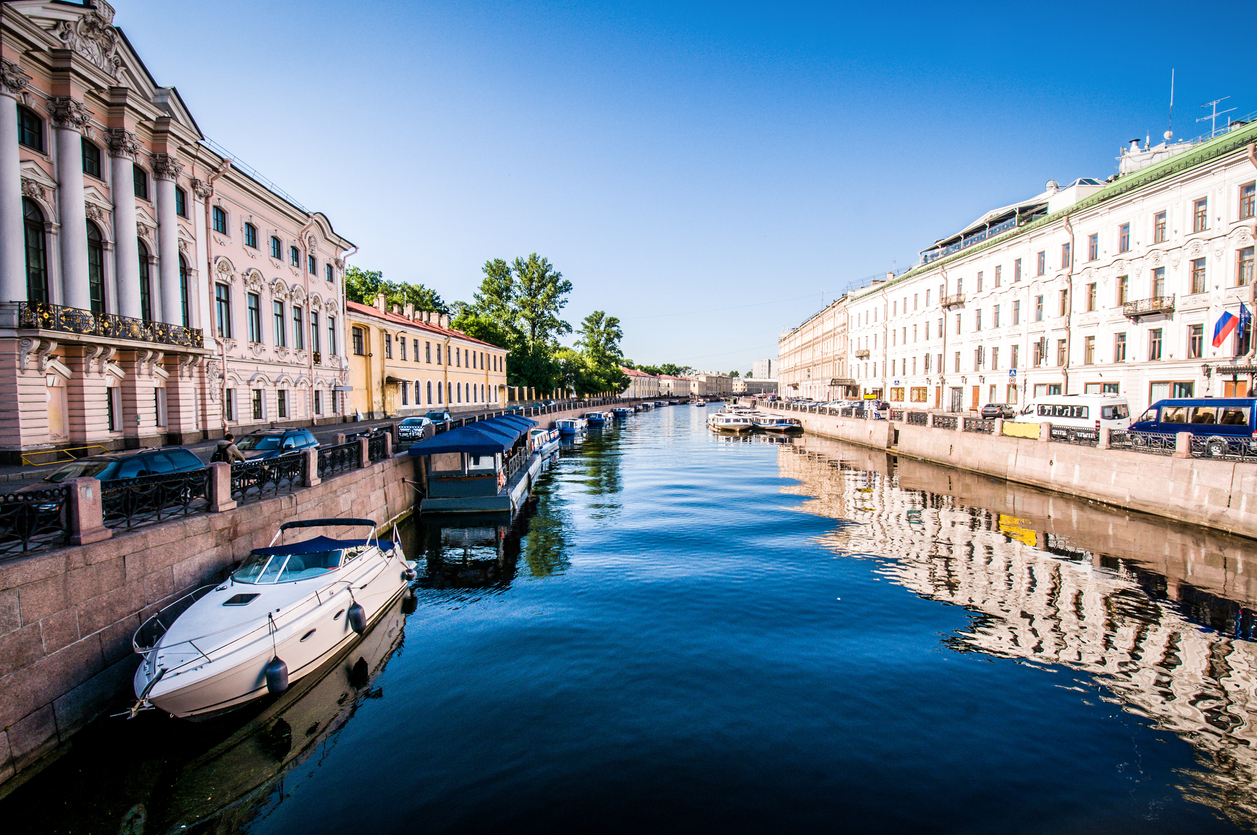
Numerous canals and rivers, magnificent palaces and cathedrals, famous drawbridges, and the white nights are among the things that make our city so special
Programme Outlines
Academics
HSE SPb X Uni Graz Summer School offers timely and thought-provoking topics relating to the legal and political grounds of EU-Russia relations. The classes will be taught by HSE faculty and visiting experts from the University of Graz. Join our summer programme to develop a broad, extensive knowledge of the field.
EU-Russia Relations: Neighbors between Cooperation and Contestation
EU-Russia Relations: Neighbors between Cooperation and Contestation
Taught by Benedikt Harzl
The 1994 Russia-EU Partnership and Cooperation Agreement (PCA) famously provides in its Article 55 that Russia is obliged to 'endeavor to ensure that its legislation will be made compatible with that of the European Community'. Clearly reflecting an early, perhaps too naive 'Fukuyamaist' notion of a political rearrangement of the Post-Soviet space, a contemporary assessment cannot but give way to a more ambivalent identification of EU-Russia relations. The seminar will embark on a Tour d’Horizon of the historical and institutional framework of EU-Russia relations after the collapse of the USSR.
It will explore the EU’s as well as Russia’s relevant foreign policy actors and institutions, which are both involved in shaping as well as pursuing bilateral relations. It will open a glimpse on the contested areas of EU and Russia’s interactions in the shared neighborhood by, inter alia, problematizing energy relations in what became known as the Eastern Partnership dimension; it will also illustrate new and unlikely encounters of contestation such as the Western Balkans, where EU influence has continuously decreased since multiple crises have reduced the Union’s attractiveness and as divisions among member states have called into question the credibility of its enlargement process. Yet, the lectures will also outline those dimensions in which EU-Russia relations are mutually beneficial and strategically sound. That includes forging ties for an irreversible solution to the Nagorno-Karabakh conflict where the interests of both Moscow and Brussels are overlapping and also encompasses the combat against climate change and international terrorism. The lectures provide students with both theoretical knowledge, encompassing legal and political tools, as well as practical insights into the history, challenges, and chances of EU-Russia relations and cooperation in various fields.
European Fundamental Rights Protection between Law and Politics: Prospects and challenges in the Europe-Russia framework
European Fundamental Rights Protection between Law and Politics: Prospects and challenges in the Europe-Russia framework
Taught by Jürgen Pirker
The European Convention on Human Rights (ECHR) serves as a central document for the protection of human and fundamental rights in the 47-member states of the Council of Europe (CoE) and has also been most effective and consistent in penetrating their legal orders. The lectures will provide an overview of the development of human and fundamental rights protection in Europe and focus on landmark decisions by the European Court of Human Rights in Strasbourg (ECtHR), including cases concerning Russia, to analyze the interaction of the national and supranational systems of human and fundamental rights.
Recent cases regarding contested socio-political problems without consensus among CoE’s member states as well as a discussion on the derogation from the ECHR in a state of emergency will deepen insights into this interaction. Participants will thus gain knowledge of European Human Rights Law, understand European judiciary as well as the dialogue between European and national supreme courts, and observe the legal and political effects of European integration and the interaction of different layers of governance. In addition, the lectures will encourage students to reflect more about the political context involving both Russia and Europe within which the vocabulary of human rights as tied to the ECHR immerses.
The multiple dimensions of the Rule of Law: Europe and Russia contextualized
The multiple dimensions of the Rule of Law: Europe and Russia contextualized
Taught by Aiste Mickonyte
The respect for the rule of law and the common values in the European Union – or the lack thereof – features among the most central issues and challenges on the agenda of the European Union. The disputes concerning the cases of Hungary and Poland, which have already metamorphosed into a long-standing conflict pose a fundamental and increasingly hazardous challenge to the respect for the underlying principles of mutual trust and sincere cooperation within the Union pursuant to its foundational treaties. These lectures examine the multiple dimensions of the rule of law and the subsequent crisis from a historic, legal and political perspective.
The focus will not only lie on the concept of the rule of law as it is expressed in the constitutional traditions common to the Member States, the Council of Europe, and the European Convention on Human Rights, as well as the law of the European Union. It will, more broadly, reflect about its interpretation from a comparative analysis covering, particularly, Russia but also the United States and other actors. As far as Europe is concerned, the practical application of the principle within the EU will be looked at from the perspective of the legal and political instruments available to the Union. The case studies of Poland and Hungary will be explicitly drawn upon to illustrate the practical challenges relating to the rule of law in the current European context. Students will gain advanced knowledge about the legal and political issues of the rule of law within the framework of EU law and beyond that will be able to reflect how this concept is referred to in Russian legal and political vocabulary.
The EU and Russia in the Middle East: Unpacking diverse approaches to transnational governance
The EU and Russia in the Middle East: Unpacking diverse approaches to transnational governance
Taught by Maximilian Lakitsch
Individual West European States, the EU as a whole as well as Russia have a long legacy of political engagement in the Middle East. The European Union’s approach towards the Arab World has been expressed in its Barcelona Process in 1995 and was later included in the European Neighborhood Policy in 2004 and then the Union for the Mediterranean in 2008. Only three years later, in 2011, the Arab Spring and its region-wide protests, revolutions, and civil wars unveiled the infectivity of the EU’s strategy to foster peace, security, and prosperity in its neighborhood. Once the unrest started, the EU’s engagement strategy for the region got seriously challenged, whereas Russia as an actor in the region resurfaced – most of all in Syria, where many people associate their hopes for a stable and prosperous future with Moscow. The lectures will outline the history of the EU’s engagement in the Middle East as well as its underlying concepts of governing and external engagement.
Students will learn how the EU manages and pursues its external relations with regard to the Middle East and how the objectives of its policies correspond to realities on the ground. It will also outline Russian policies for this crucial region and will both encourage and enable students to identify areas of cooperation and competition between Brussels and Moscow in the Middle East.
Kelsen’s Sovereignty: Different Approaches in the EU and Russia
Kelsen’s Sovereignty: Different Approaches in the EU and Russia
Taught by Paul Gragl
The term 'sovereignty' possesses a variety of meanings, depending on the actual context within which it is used. The lectures intend to discuss the most significant varieties of sovereignty through a very particular lens, namely that of Hans Kelsen who, as a legal theorist and philosopher, engaged with this concept quite intensely and critically.
First, we will look at the sovereignty of States as the origin and basis of the international legal order and whether it can, from a legal-theoretical viewpoint, be upheld or not. For Kelsen, sovereignty was a mere chimera in a world governed by international law, as State sovereignty (in the sense of not being bound by the law) and international law (as being binding on States) are theoretically incompatible with one another. From this follows that sovereignty can only exist anymore in a horizontal sense among States, but not vertically between States and public international law.
Second, we will also discuss the meaning of sovereignty in the context of (representative) democracy, popular sovereignty, and the debate between Kelsen and Carl Schmitt on what institution should perform the role of the 'guardian of the constitution'. This is exactly the point where, according to Kelsen, unbridled democracy can and should be cushioned by the rule of law.
Third and last, we will then assess how these concepts of both State sovereignty and popular sovereignty are regarded differently in the EU and Russia and what this means for a future dialogue between them.
Russia’s identity in world politics
Russia’s identity in world politics
Taught by Sergei Akopov
The lectures will cover the socio-cultural premises of Russian foreign policy, which often remain implicit but which invite direct inquiry. Using the concept of symbolic politics, participants will 'untangle' four dimensions of Russia’s international relations:
- the language with which Russians define their society (the ‘we’ dimension);
- how Russia frames messages about its ‘friends’ or ‘enemies’ (the ‘significant others’ dimension);
- how Russian elites produce narratives and metaphors of collective memory (the ‘time’ dimension);
- and how Russia perceives its geopolitical space (the dimension of ‘political space’).
The Russian Distrust of Human Rights: Its Roots in the Intellectual History
The Russian Distrust of Human Rights: Its Roots in the Intellectual History
Taught by Mikhail Antonov
In the first years of its post-Communist existence, Russia was trying to integrate the principles and institutions specific to the Western legal tradition into its legal system. Among those concepts were also human rights which enshrined in the 1993 Constitution as the foundations of Russian law. However, with the rise of conservative moods, the idea of human rights found itself under scrutiny. As in the Soviet time, this idea quite often is pictured as a pretext for Western meddling into Russian affairs and as something alien to Russian legal culture. This skeptical tradition goes to the early Russian intellectual history, upon which often relies the contemporary criticism of human rights. The lectures will examine this tradition and its impact on the contemporary legal development of Russia.
Russian foreign policy and security
Russian foreign policy and security
Taught by Vera Ageeva
Covering the evolution of Russian foreign policy over the past 30 years and its current priorities and achievements, the lectures will include an overview of Russian strategy in the field of security, in Russia’s economic cooperation, and soft power (including concepts of ‘Russian World’ and Russian diaspora abroad).
A special emphasis will be put on Russian regional priorities such as CIS, Europe, BRICS, and the Middle East. Participants will learn what Russia aspires to in these regions and what are its major achievements and failures.
The Political Economy of Post-communist Transformation
The Political Economy of Post-communist Transformation
Taught by Andrei Scherbak
These lectures will explore the complex relations between political and economic transition in Russia and other post-communist countries in the last 40 years. In the 1980s, communist political leaders realized that the command system could no longer provide economic growth. Their response to this challenge was to launch economic reforms that in turn had a significant impact on the political system.
While economic opening and reform in China resulted in prolonged economic growth, reforms in Russia led to a severe economic crisis with a 45% decrease in GDP between 1991 and 1998, before growth took off during the 2000s. Today, many post-communist countries stand at a point where they have to re-think their underlying economic model.
To understand where they are coming from, and where they might be headed, the lectures offer an in-depth discussion of the concept of economic growth in post-communist transition. What are the determinants of economic growth in both countries? What is the role played by politicians, economic advisors, and business elites, the effect of shock therapy and gradualism, and the role of state institutions? After considering a short historical overview, participants will discuss all of these topics in turn.
Extracurricular
Apart from the intensive study programme, you will be offered some fascinating extracurricular activities such as a boat trip and an outing to the cradle of the Russian state, Veliky Novgorod. You will also have time to explore the world-famous landmarks of St. Petersburg for yourself.




Application Procedure
-
Step 1: Apply by May 15, 2022
You are required to fill out the online application form. The documents you need to prepare in advance:
- Scanned copy of your passport
- CV
- Motivation letter where you explain why you would like to take part in HSE SPb X Uni Graz Summer School
- Photo
-
Step 2: Pay the registration fee upon subitting your application
Once you have submitted your application, you are automatically transferred to HSE Payment System for paying the registration fee.
-
Step 3: Receive confirmation of acceptance
Our team will contact you and send the acceptance letter with further instructions.
-
Step 4: Pay the participation fee
The participation fee is to be paid within 14 calendar days from the receipt of the confirmation. The deadline extension is granted upon request.
-
Step 5: Receive visa invitation and begin prepare your visit to Russia
Our team will be submitting documents for issuing a visa invitation for you. The process could be initiated 3 months prior to your visit to Russia (mid-May 2022).
Instructors

Associate Professor, Deputy Head, Department of Political Science and International Affairs, Saint Petersburg School of Social Sciences and Area Studies, HSE Saint Petersburg

Professor, Department of Political Science and International Affairs, Saint Petersburg School of Social Sciences and Area Studies, HSE Saint Petersburg

Professor, Department of Theory and History of Law and State, School of Law, HSE Saint Petersburg

Professor. MMag. Dr, Institute of European Law, University of Graz

Assistant Professor, Mag. Dr.iur. M.A., Centre for East European Law and Eurasian Studies, University of Graz

MMag. Dr.phil. M.A., Department of the Foundations of Law, University of Graz

Dr.iur. BA. LL.M., Faculty of Law, University of Graz

Associate Professor, MMag. DDr., Institute of Public Law and Political Science, University of Graz

Associate Professor, Head, Department of Political Science and International Affairs, Saint Petersburg School of Social Sciences and Area Studies, HSE Saint Petersburg
Fees
Registration fee: 5,000 RUB
Participation fee (covers tuition, extracurricular activities, accommodation, and visa support):
| Amount | Applicant's category |
|---|---|
|
95,000 RUB |
Applicants from non-partner universities (current students and graduates), Russian universities' graduates |
|
73,000 RUB |
Applicants from partner universities (current students and alumni), group of students (6 and more ppl) from one university |
|
65,000 RUB |
Applicants from Russian universities |
|
55,000 RUB |
HSE graduates (full-time degree programmes, supplementary programmes, mobility, and other short-term programmes) |
|
40,000 RUB |
Current HSE students (full-time degree programmes, supplementary programmes, mobility, and other short-term programmes) |
Accommodation
HSE provides accommodation in one of the student dormitories during HSE SPb X Uni Graz Summer School at an affordable cost. If you prefer to stay at our dormitory, please tick this option while submitting your application. The lodging costs are 200 rubles per day. If you do not require accommodation, those costs will be eliminated from your participation fee.